Atlantic petrel
Endangered gadfly petrel endemic to two South Atlantic islands.

Wikipedia / Wikimedia Commons
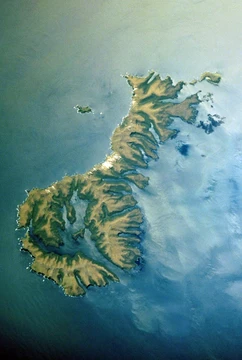
The Atlantic petrel (Pterodroma incerta) is a type of gadfly petrel found only in the South Atlantic Ocean. It breeds in huge colonies on Tristan da Cunha and Gough Island, and forages at sea from Brazil to Namibia, with most sightings occurring west of the breeding islands and along the subtropical convergence. Adults measure about 43 cm long and are powerful, large, and stocky, with dark plumage and a white belly. Their heads can appear grey when feathers are worn, and they have brown undercoating on their wings and tail. These petrels typically live around 15 years.
Though the global population is estimated at roughly 5 million birds, the species is listed as endangered by the IUCN. It is confined to just two breeding islands and has declined historically due to being hunted for food. Studies suggest there are about 1.1 million breeding pairs, but only about 25% of eggs survive, causing the large population to shrink rapidly. Research has focused on Gough Island because the other breeding sites are inaccessible due to steep cliffs. This high reproductive mortality could lead to local extinction and a shrinking home range.
The petrel mainly feeds on squid, which makes up 87% of its diet in some studies. It also eats lanternfish (Myctophidae) as they rise to the surface at night, along with crustaceans and some fish. The species is known for breeding at night. Nests are located between 50 and 300 meters above sea level on cliffsides on Gough Island; on Tristan da Cunha, nests were historically found up to 700 meters. They dig burrows in peaty soils within fern-bush vegetation.
The Atlantic petrel is currently threatened by introduced house mice, which prey on newly hatched chicks. Mouse predation is especially severe on Gough Island, where the mice have rapidly evolved to be about twice the size of mainland mice due to island syndrome. Because the breeding range is small, severe hurricanes also pose an intermittent threat to breeding populations, and increasingly intense storms may affect the availability and predictability of food sources like squid.
Conservation efforts began around the 1970s on Tristan da Cunha, with programs to teach people about the species, its ecological importance, and the dangers it faces, while researching ways to protect it in the future. Although population numbers are high, the decline is thought to stem from high mortality
- Scientific name
- Pterodroma incerta
- Average lifespan
- 15 years
- World population estimate
- 5 million birds
- Number of breeding islands
- 2
- IUCN status
- Endangered (since 2008)
- Primary diet component
- Squid (87% in some studies)
- Average length
- 43 cm
Lore & Background
The Atlantic petrel breeds only on Tristan da Cunha and Gough Island, with nesting burrows dug in peaty soils in fern-bush vegetation at elevations between 50 and 300 meters above sea level on Gough Island, and formerly up to 700 meters on Tristan da Cunha. It is nocturnal in its breeding habits and feeds mostly on squid, also taking lanternfishes as they ascend to the surface at night, along with crustaceans and some fish. At sea, most records occur west of the breeding islands and along the subtropical convergence.
Reader's Guide
The Atlantic petrel is significant as a large, long-lived seabird restricted to a tiny breeding range, making it highly vulnerable to localized threats. Despite a global population of roughly 5 million birds, it is listed as endangered because of historical exploitation for food and severe ongoing pressures. The primary current threat is predation by introduced house mice on Gough Island, which have evolved to about twice the size of mainland mice through island syndrome and prey on recently-hatched chicks. Only about 25% of eggs survive, causing rapid population decline. Severe hurricanes also pose intermittent threats to breeding colonies and food availability. Conservation efforts include educational programs on Tristan da Cunha since the 1970s, research on mouse eradication, and demographic mapping on Gough Island, which is a nature reserve and World Heritage site with a field station for observation. The species was uplisted from vulnerable to endangered in 2008 after research revealed the severe impact of mouse predation.
Did You Know?
- The Atlantic petrel's diet is 87% squid in some studies.
- Only about 25% of eggs survive, contributing to rapid population decline.
- House mice on Gough Island have evolved to about twice the size of mainland mice.
- The species was uplisted from vulnerable to endangered by the IUCN in 2008.
More in Birds of subantarctic islands 1-24
Spotted an error? Know more?
This is a living reference — every entry is fact-audited, and reader corrections feed straight into our audit queue. Suggest an edit · See this site's audit record